




Your brain is nearly 60% fat, DHA is one of its major structural fatty acids, and yet research suggests up to 76% of us may not be getting enough EPA and DHA.
And here’s the catch: unless oily fish regularly makes it onto your plate, you could be one of them without even realising it.
Because while everyone’s talking protein, fibre and magnesium, omega-3 might just be the nutritional blind spot hiding in your diet.
From brain and heart function to emerging research around attention, ADHD and fertility, EPA and DHA are involved in a much bigger conversation than simply “eat more fish”.
Consider this your omega-3 wake-up call. Let’s get into the good fats.
😉 Stay till the end to meet our citrusy alternative to submarine-sized capsules and fishy burps.
What Are Omega-3 Fatty Acids?
Omega-3 fatty acids are a family of polyunsaturated fatty acids found in both plant and marine foods, with three names appearing most often: ALA, EPA and DHA.
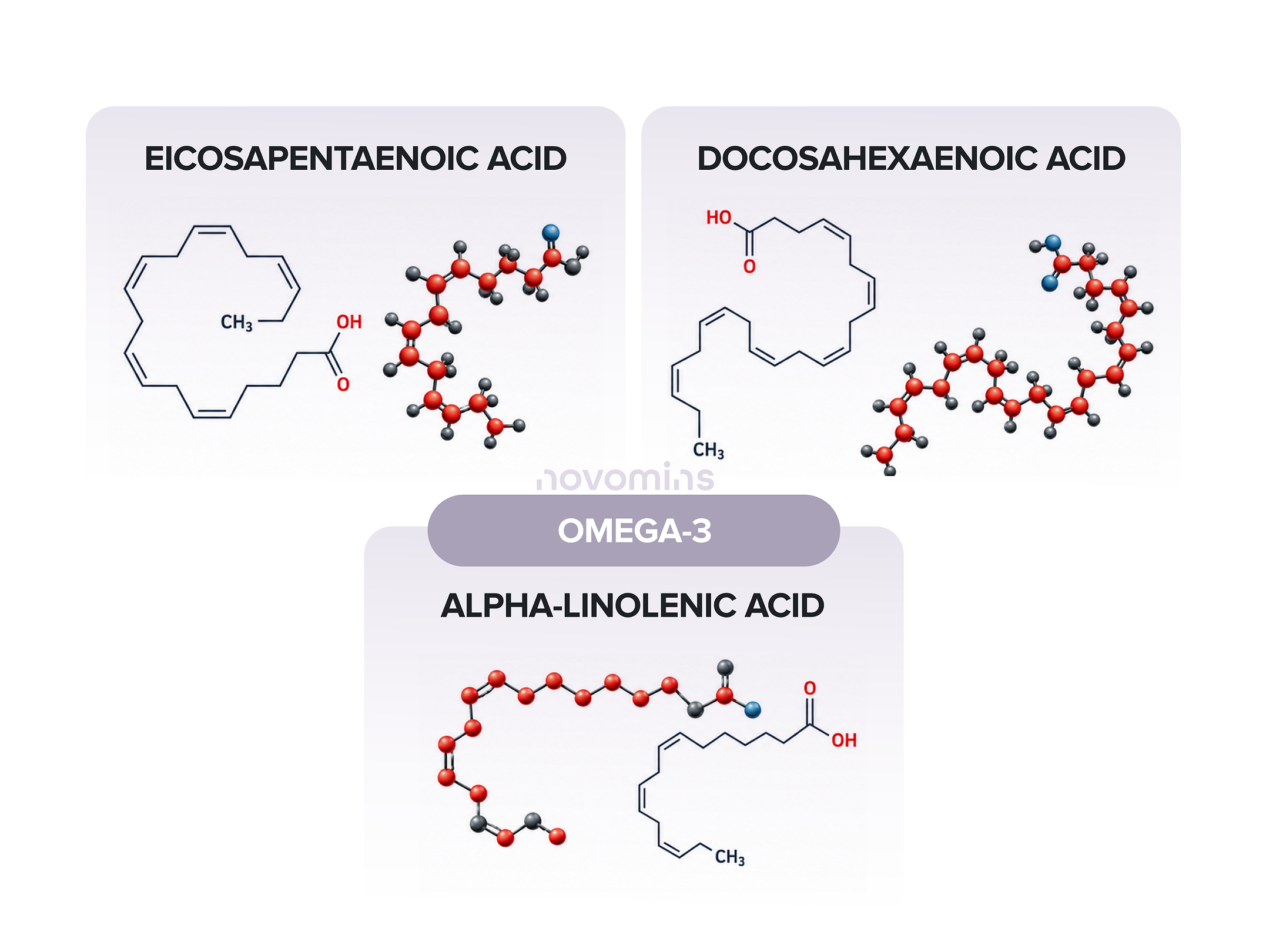
ALA (alpha-linolenic acid) is an essential fatty acid, meaning your body cannot make it and needs to obtain it through the diet.
View as text
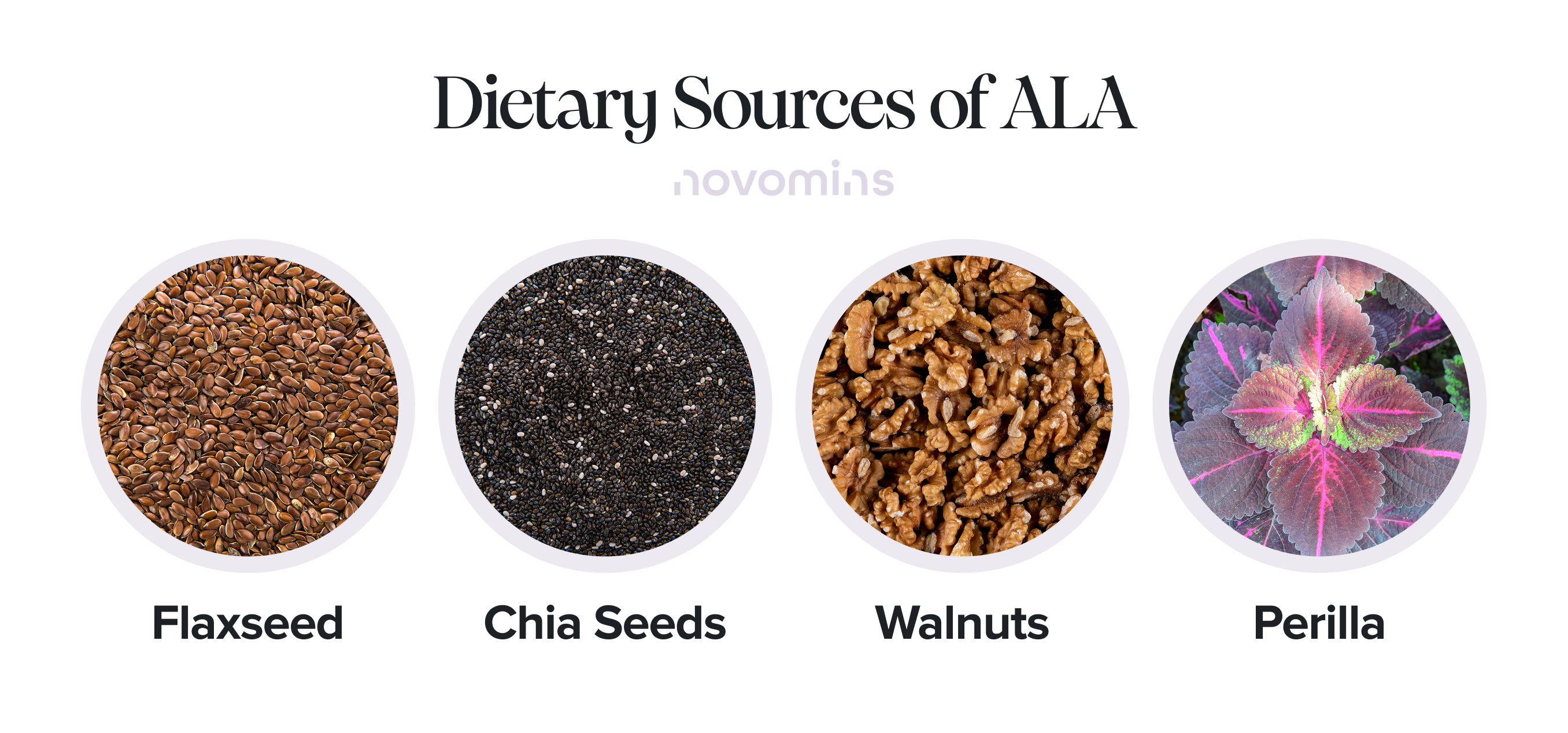
Dietary Sources of ALA
- Flaxseed
- Chia Seeds
- Walnuts
- Perilla
Then there are EPA (eicosapentaenoic acid) and DHA (docosahexaenoic acid), the long-chain omega-3 fatty acids found predominantly in oily fish and fish oil.
Your body can convert ALA into EPA and DHA, although this conversion is naturally limited. Direct sources of EPA and DHA include oily fish and fish oil, while plant-based sources of ALA, such as chia seeds and flaxseed, remain a valuable way to include omega-3 in the diet, particularly for those following a vegan or plant-based lifestyle.
Omega 3 vs Omega 6 vs Omega 9: What’s the Difference?
When people talk about omega 3, 6 and 9, it can sound as though they’re essentially variations of the same thing. They’re not.
Omega-3 and omega-6 include essential fatty acids, which means we need to obtain them through food. Omega-9 fatty acids are different because the body can produce them, although they’re also abundant in foods such as olive oil, avocado and nuts.
The issue isn’t that one omega is “good” and another is “bad”. Omega-6 is an essential part of the diet too. The interesting part is how easily we tend to get each one.
View as text
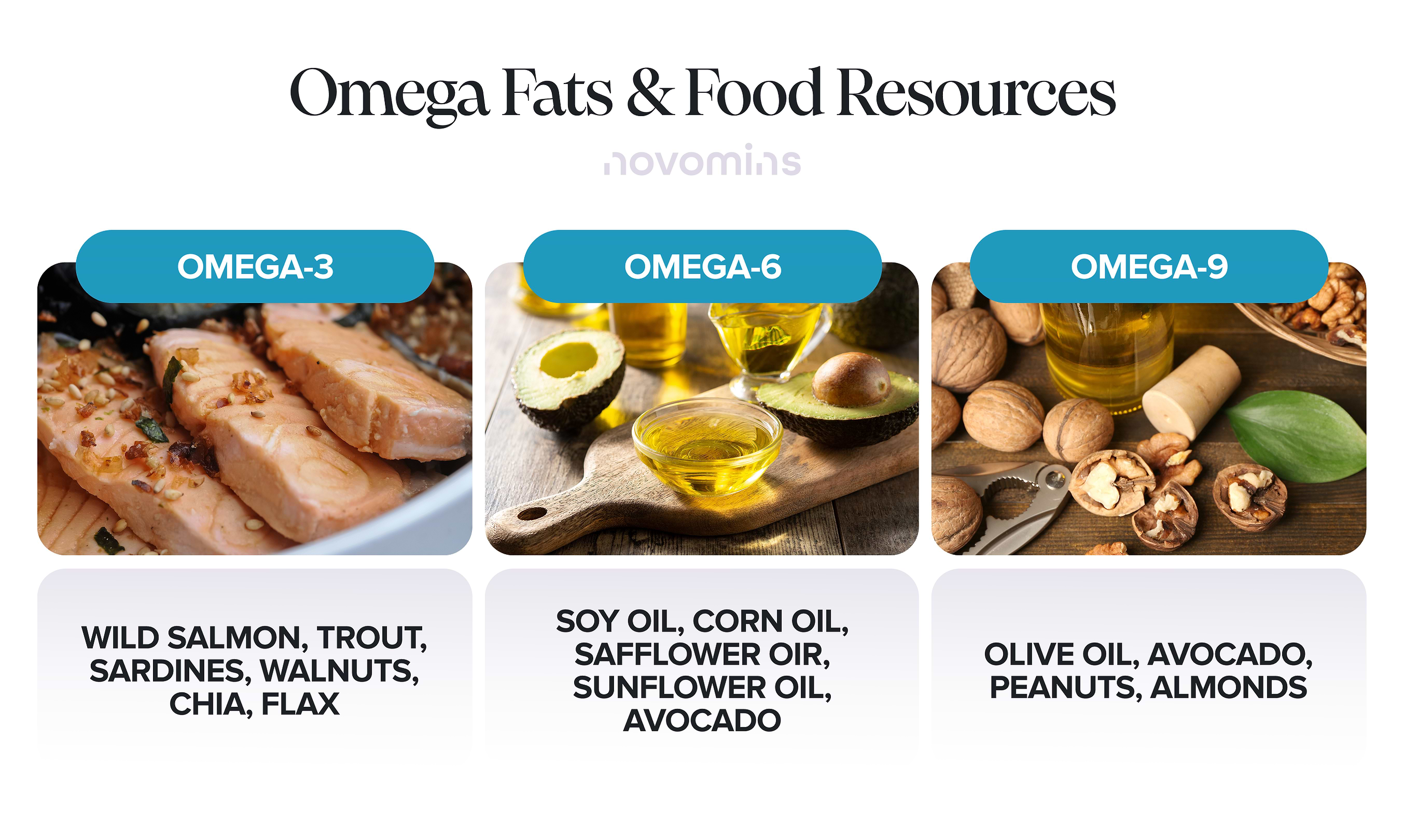
Omega Fats & Food Resources
| OMEGA-3 | OMEGA-6 | OMEGA-9 |
|---|---|---|
| WILD SALMON, TROUT, SARDINES, WALNUTS, CHIA, FLAX | SOY OIL, CORN OIL, SAFFLOWER OIR, SUNFLOWER OIL, AVOCADO | OLIVE OIL, AVOCADO, PEANUTS, ALMONDS |
Omega-6 fatty acids are found naturally in nuts and seeds and are also present in many commonly consumed vegetable oils. Omega-9 is readily available from foods such as olive oil, nuts and avocado.
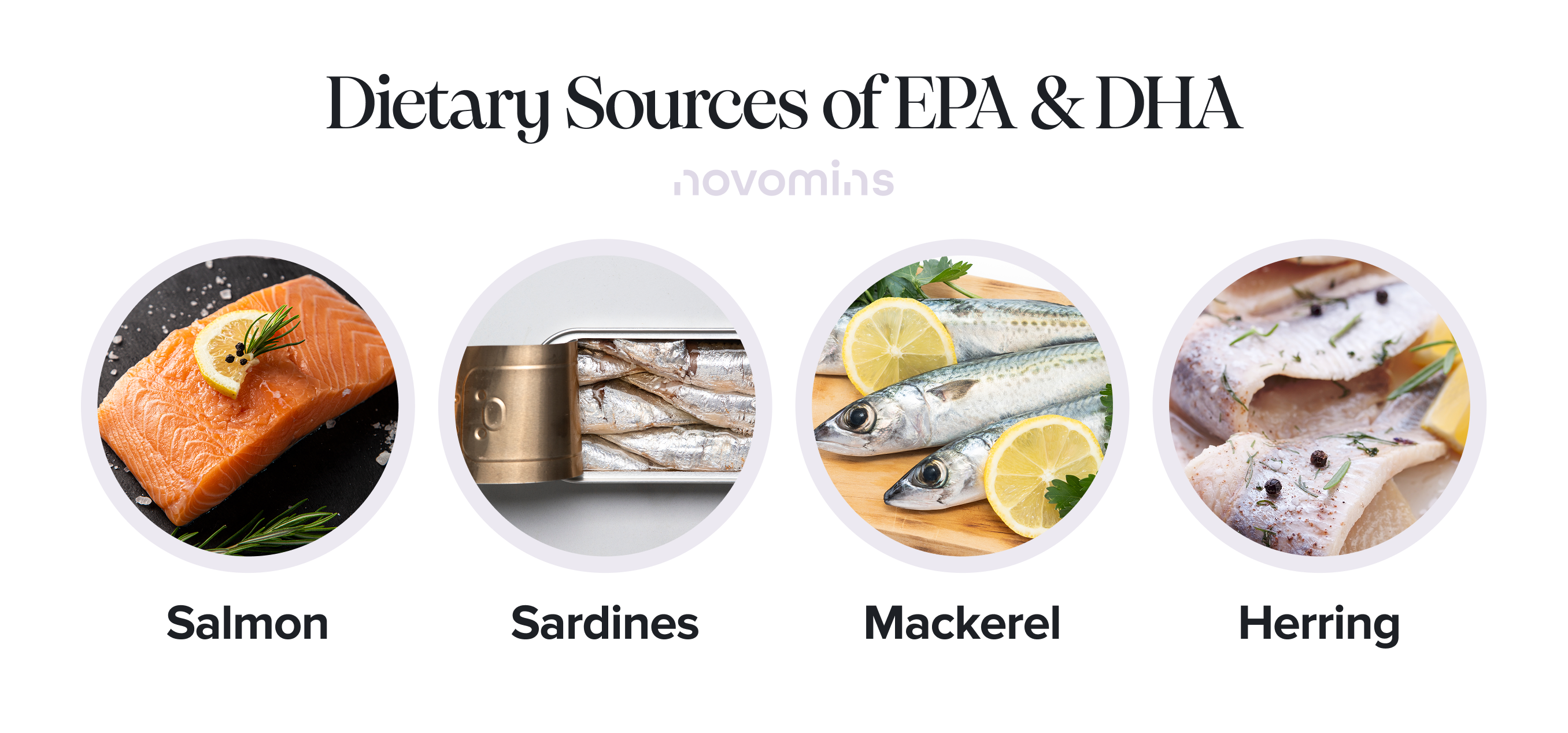
EPA and DHA, however, have a more limited food list.
View as text
- Salmon
- Sardines
- Mackerel
- Herring
If oily fish isn’t making a regular appearance on your plate, your intake of EPA and DHA may deserve a little more attention.
Why Can Modern Diets Fall Short on Omega-3?
One of the reasons omega-3 intake is worth considering is simply that the foods providing EPA and DHA may not be foods you eat particularly often.
While plant-based omega-3 sources such as chia seeds, flaxseed and walnuts provide ALA, the body’s conversion of ALA into EPA and DHA is limited.
So, while omega-6 and omega-9 fatty acids can be relatively easy to encounter across an everyday diet, getting EPA and DHA depends more heavily on eating oily fish and other marine sources regularly.

View as text
The question, then, isn't whether omega-6 is bad. It's much simpler: are you getting enough omega-3 too?
What Is the Ideal Omega 3 to Omega 6 Ratio?
Search for the “ideal omega 3 to omega 6 ratio” and you’ll find plenty of numbers, but nutrition is rarely that tidy.
Rather than becoming fixated on achieving one perfect ratio, a more practical approach is to look at your overall dietary pattern and make sure omega-3-rich foods aren’t being forgotten.
If your diet contains plenty of nuts, seeds, cooking oils, avocado and olive oil, but oily fish is more of an occasional guest, that tells you considerably more about your personal omega intake than doing nutritional algebra over dinner.
What Can Low Omega-3 Status Look Like?
Omega-3 fatty acids form part of cell membranes throughout the body, with EPA and DHA attracting particular research interest across the brain, eyes, cardiovascular system and other tissues.
That’s why scientists aren’t only interested in how much omega-3 we eat, but also what lower omega-3 status may mean across different stages of life.
And it might be more relevant than you think.
View as text
Did You Know?
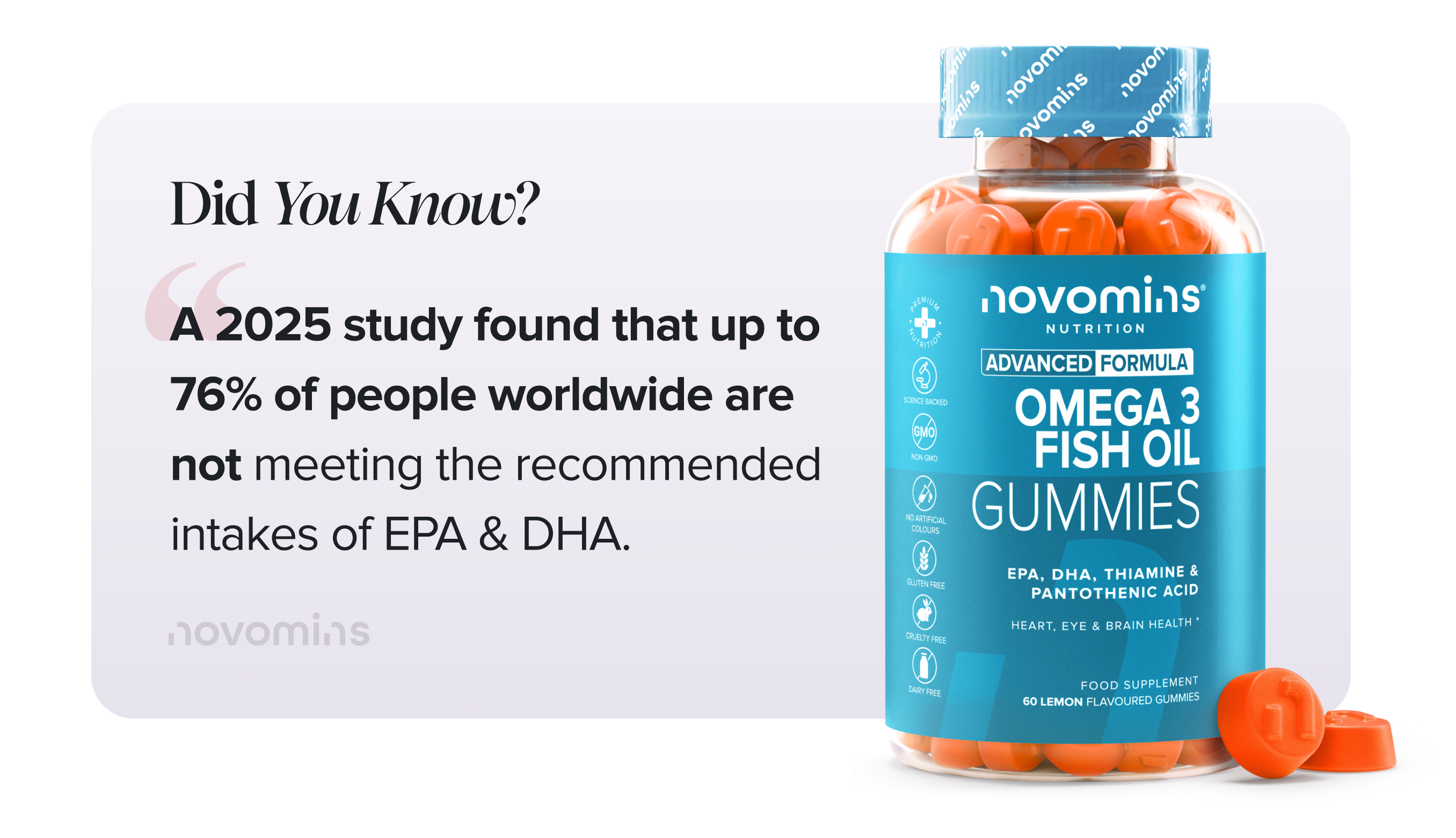
A 2025 study found that up to 76% of people worldwide are not meeting the recommended intakes of EPA & DHA.
Skin Can Be One of the Clues
Essential fatty acids help form part of the skin’s lipid barrier, so inadequate essential fatty acid intake can show up somewhere very visible: your skin.
View as text
Severe essential fatty acid deficiency has been associated with rough, dry or scaly skin and dermatitis-like changes, reflecting the important structural role fatty acids play within healthy skin.
That doesn’t mean every dry patch is your body asking for fish oil. Skin is complicated. But it does show that essential fats are doing considerably more behind the scenes than we sometimes realise.
The Brain Connection
The brain is where the omega-3 story gets particularly interesting.
DHA is highly concentrated in the brain, and researchers have repeatedly investigated the relationship between EPA and DHA status, cognition and mental health.
View as text
Studies have reported lower blood or red blood cell levels of EPA and DHA in some populations with psychiatric and neurodevelopmental conditions, including major depression, bipolar disorder, ADHD and schizophrenia.
These associations don’t mean that low omega-3 causes these conditions. What they do help explain is why EPA, DHA and the brain remain such an active area of nutritional research.
And that interest doesn’t stop with mental health.
Lower omega-3 status has also been associated in observational research with differences in brain structure and cognitive outcomes, while long-chain omega-3 fatty acids continue to be investigated in relation to cognitive ageing, neuro-inflammation and dementia risk.
Your Heart Has an Omega-3 Story Too
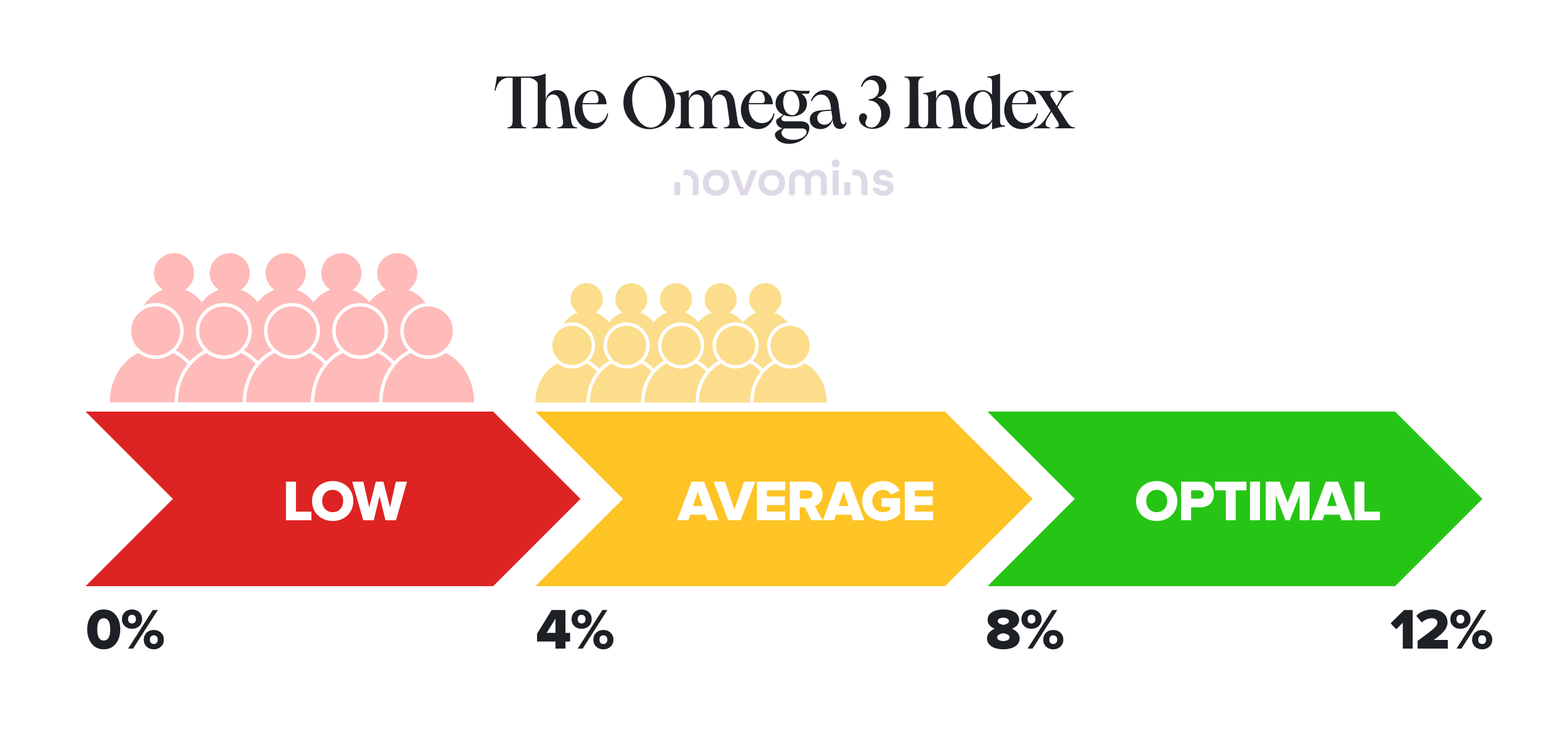
The cardiovascular system gives researchers another way of looking at omega-3 status through something called the Omega-3 Index, which measures EPA and DHA within red blood cell membranes.
View as text
The Omega 3 Index
| Index Range | Category |
|---|---|
| 0% - 4% | LOW |
| 4% - 8% | AVERAGE |
| 8% - 12% | OPTIMAL |
Research has associated a higher Omega-3 Index with more favourable cardiovascular outcomes, while lower levels have been associated with greater cardiovascular risk.
Scientists have also investigated omega-3 status in relation to heart rate variability and cardiovascular responses to stress.
Omega-3 & Inflammation: What Does the Research Say?
The research gets even broader when you look at inflammation.
View as text
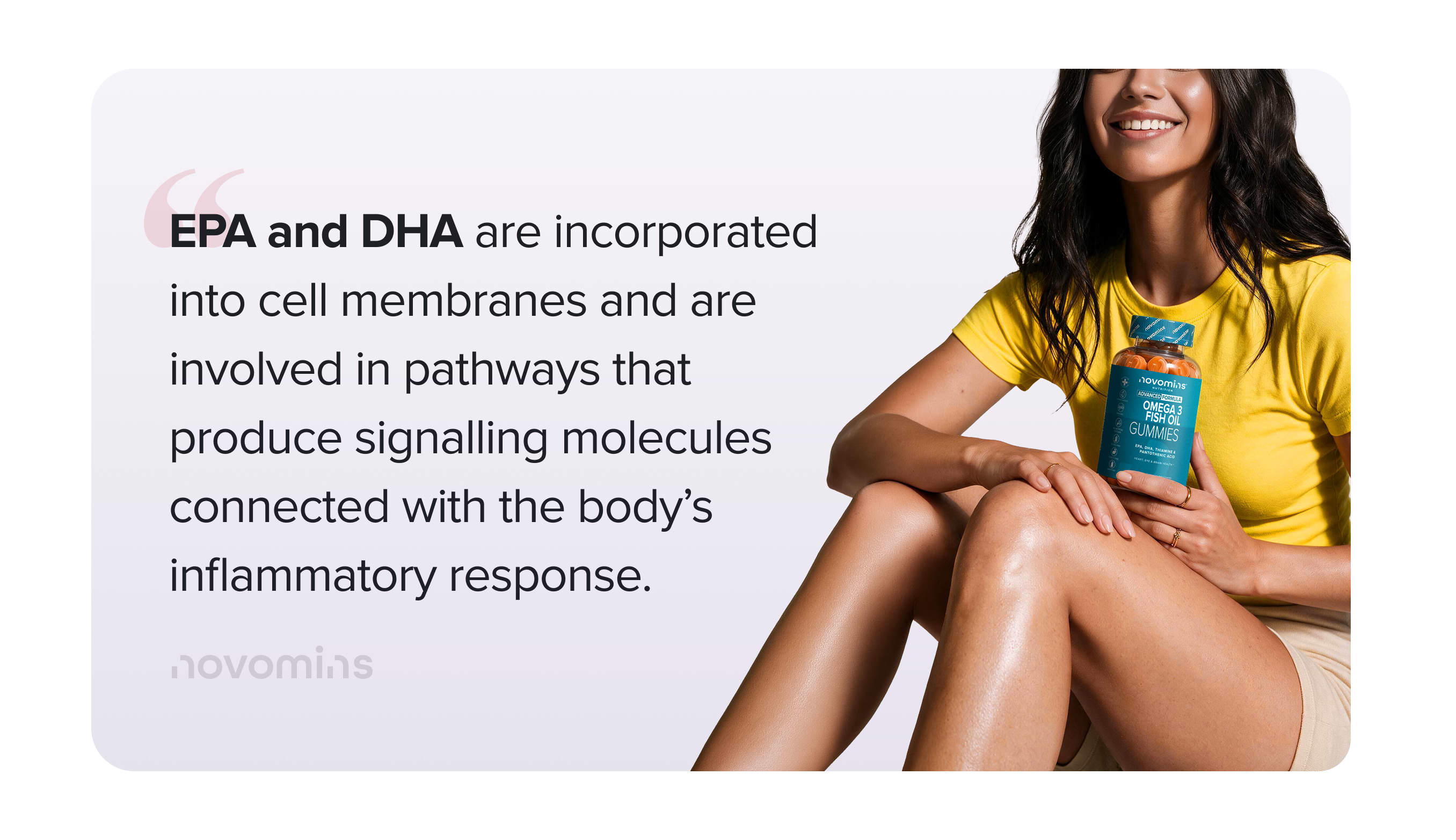
EPA and DHA are incorporated into cell membranes and are involved in pathways that produce signalling molecules connected with the body's inflammatory response.
This has led to considerable scientific interest in omega-3 fatty acids across conditions characterised by chronic inflammation.
Growing research shows that EPA and DHA interact with biological pathways involved in inflammatory processes, giving scientists another reason to keep investigating these fatty acids beyond their established nutritional roles.
Omega 3 During Pregnancy: Supporting Early Development
The importance of DHA begins long before adulthood.
View as text
DHA is an important structural fatty acid in the brain and retina, and during pregnancy, maternal DHA intake contributes to the normal brain development and normal development of the eyes of the foetus.
That relationship continues after birth too. Maternal DHA intake contributes to the normal brain and eye development of breastfed infants.
Omega-3 and Fertility: It Starts Before Conception
Omega-3 is attracting attention in fertility research for both women and men.
View as text
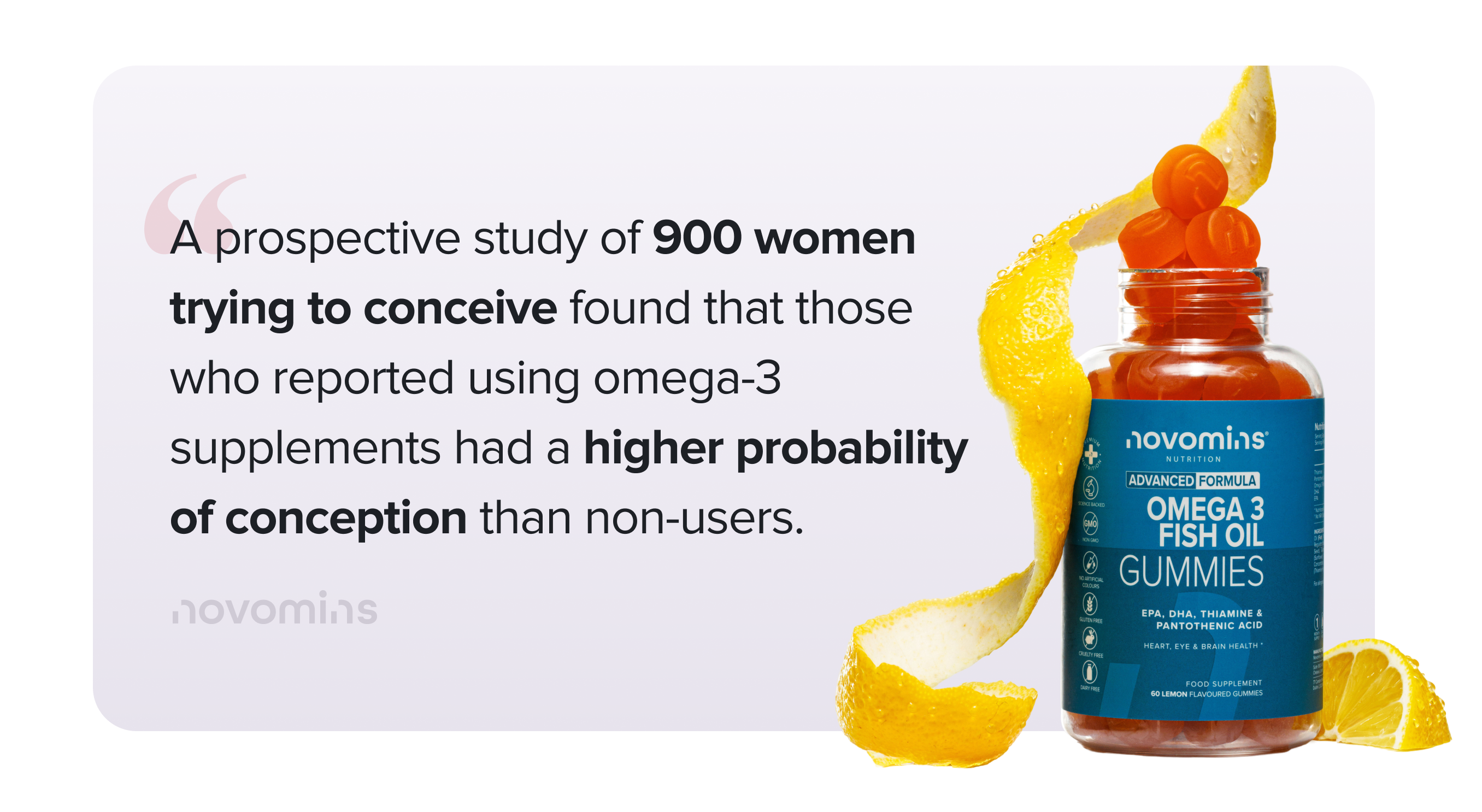
A prospective study of 900 women trying to conceive found that those who reported using omega-3 supplements had a higher probability of conception than non-users.
There’s an interesting male fertility story too. A systematic review found that omega-3 supplementation in infertile men was associated with improved sperm motility and increased DHA concentration in seminal fluid.
The Takeaway? From early development through adulthood and into later life, DHA remains an interesting part of the nutrition conversation.
Does Omega-3 Help With Focus and ADHD?
Which brings us back to the brain, and one particularly interesting area of research: attention and ADHD.
Because DHA is an important structural component of the brain and contributes to normal brain function, researchers have investigated whether omega-3 status might also be relevant to attention.
View as text
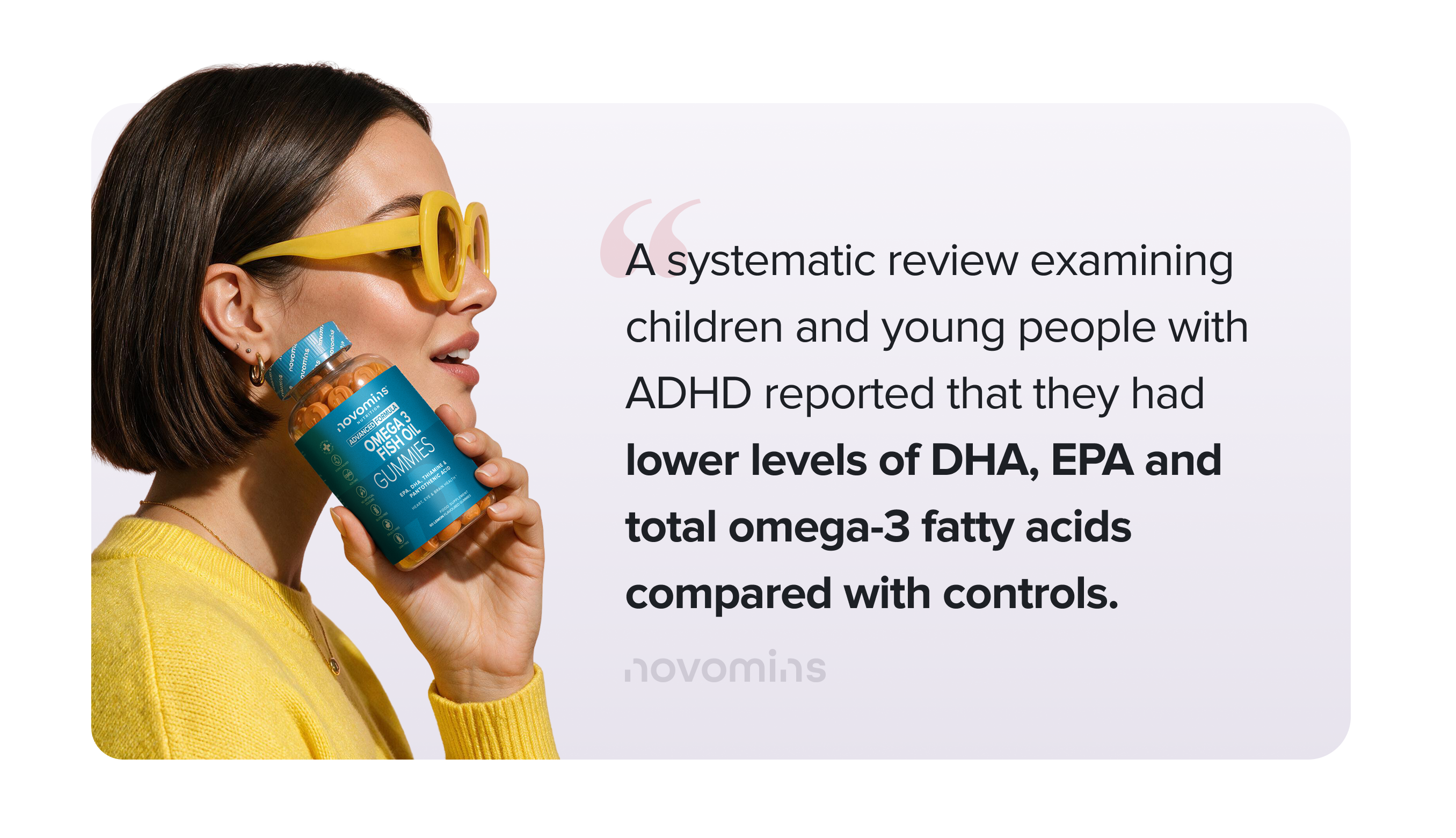
A systematic review examining children and young people with ADHD reported that they had lower levels of DHA, EPA and total omega-3 fatty acids compared with controls.
This doesn’t mean omega-3 is a treatment for ADHD. What it does show is why scientists remain interested in the relationship between EPA, DHA, omega-3 status and attention, particularly when considered alongside DHA’s established role in maintaining normal brain function.
The bigger picture is becoming pretty clear: omega-3 isn’t just a “heart healthy fat” or a “brain nutrient”. EPA and DHA are involved in biological structures and processes throughout the body, and research continues to uncover just how far that story extends.
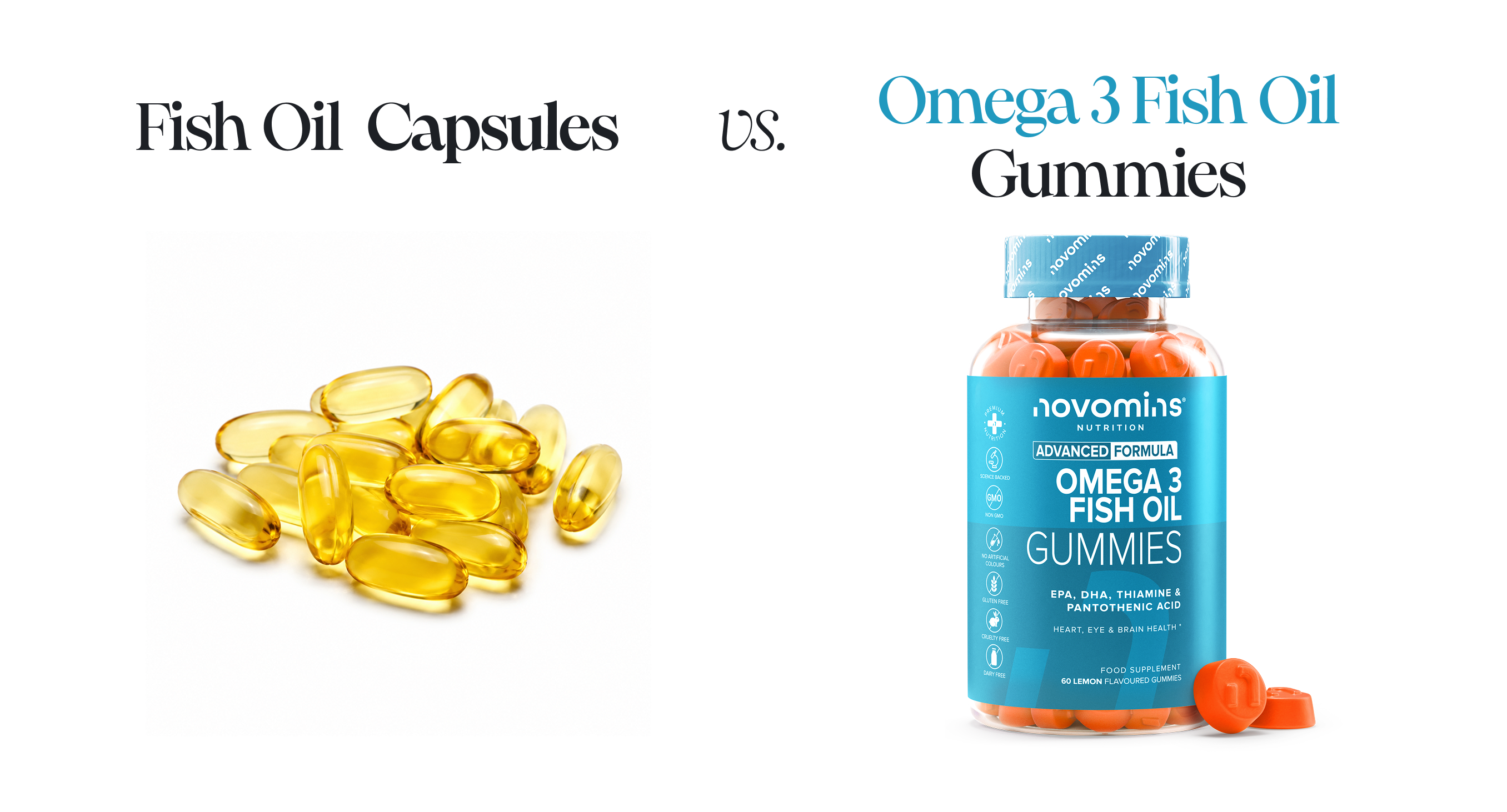
Fish Oil Capsules vs Gummies: Why Make Omega-3 a Gummy?
Knowing you should get enough omega-3 and actually doing it consistently are two very different things.
Maybe salmon isn’t appearing on the weekly menu. Maybe sardines have never made it past the front door. Or maybe you’ve tried traditional fish oil supplements, but swallowing a capsule the size of a small submarine followed by a distinctly fishy reminder later wasn’t exactly calling you back every morning.
And that’s the thing about supplements: the best routine is the one you can actually stick to.
So, naturally, we made a gummy for it!
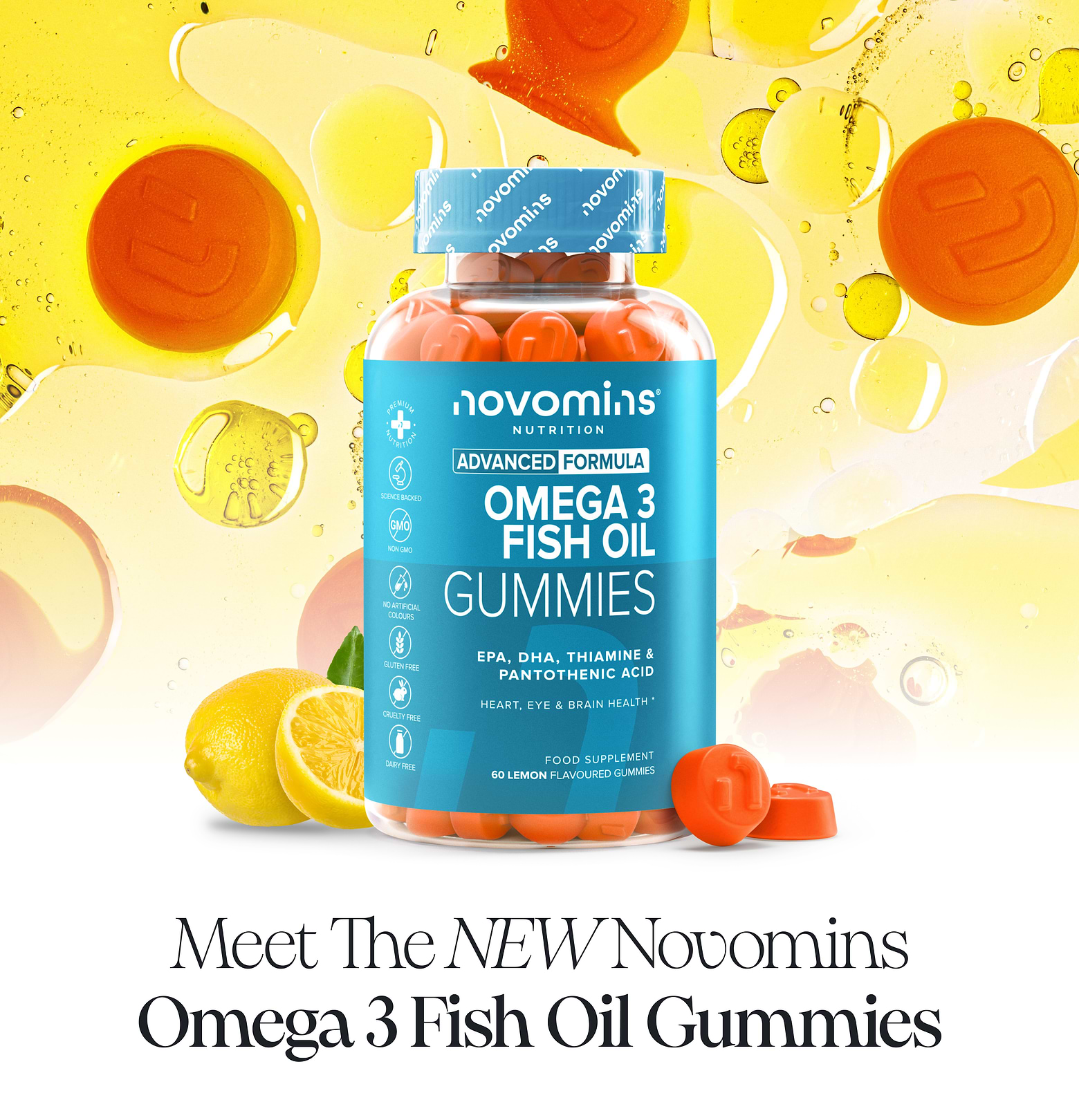
Meet Novomins Omega-3 Fish Oil Gummies
Our new Omega-3 Fish Oil Gummies combine sustainable fish oil-derived omega-3 fatty acids, including EPA and DHA, with the essential B vitamins thiamine and pantothenic acid, all wrapped up in a fresh lemon-flavoured gummy.
Why Did We Add B Vitamins?
EPA and DHA might be the headline act, but we wanted the formula to do a little more.
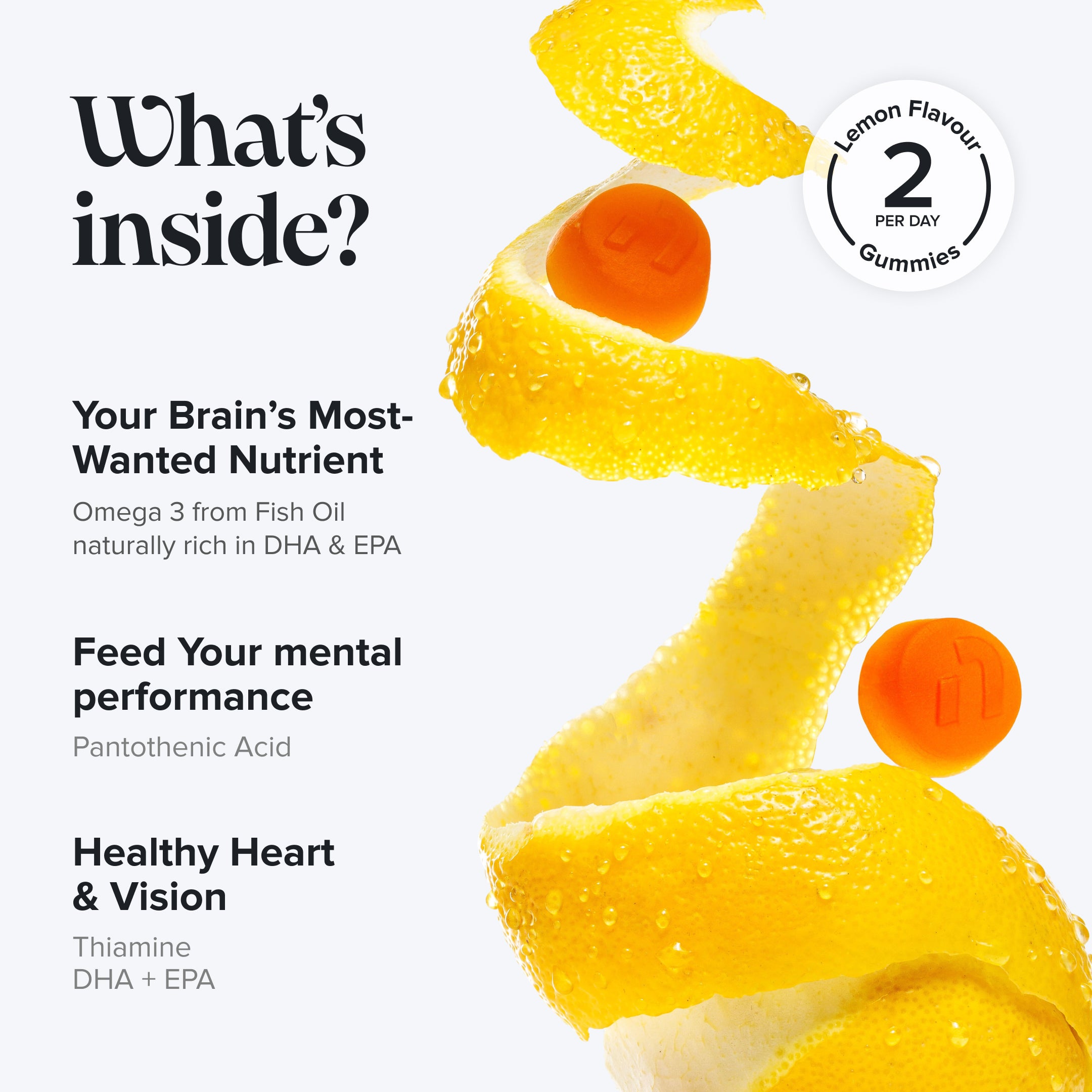
That’s why our Omega-3 Fish Oil Gummies also contain thiamine (vitamin B1) and pantothenic acid (vitamin B5), two essential B vitamins with established roles in energy, psychological function, and mental performance.
Thiamine: For Energy, Your Mind & Nervous System
Thiamine contributes to normal energy-yielding metabolism, psychological function, and the normal functioning of the nervous system. It also contributes to the normal function of the heart.
So alongside the omega-3 story, B1 brings another layer of everyday nutritional support for both mind and body.
Pantothenic Acid: For Mental Performance & Energy
Then there’s pantothenic acid, otherwise known as vitamin B5.
Pantothenic acid contributes to normal mental performance, energy-yielding metabolism, and the reduction of tiredness and fatigue. It also contributes to the normal synthesis and metabolism of steroid hormones, vitamin D, and some neurotransmitters.
Which feels particularly relevant when your brain is currently responsible for work, appointments, messages, passwords, shopping lists and remembering why you walked into the kitchen in the first place.
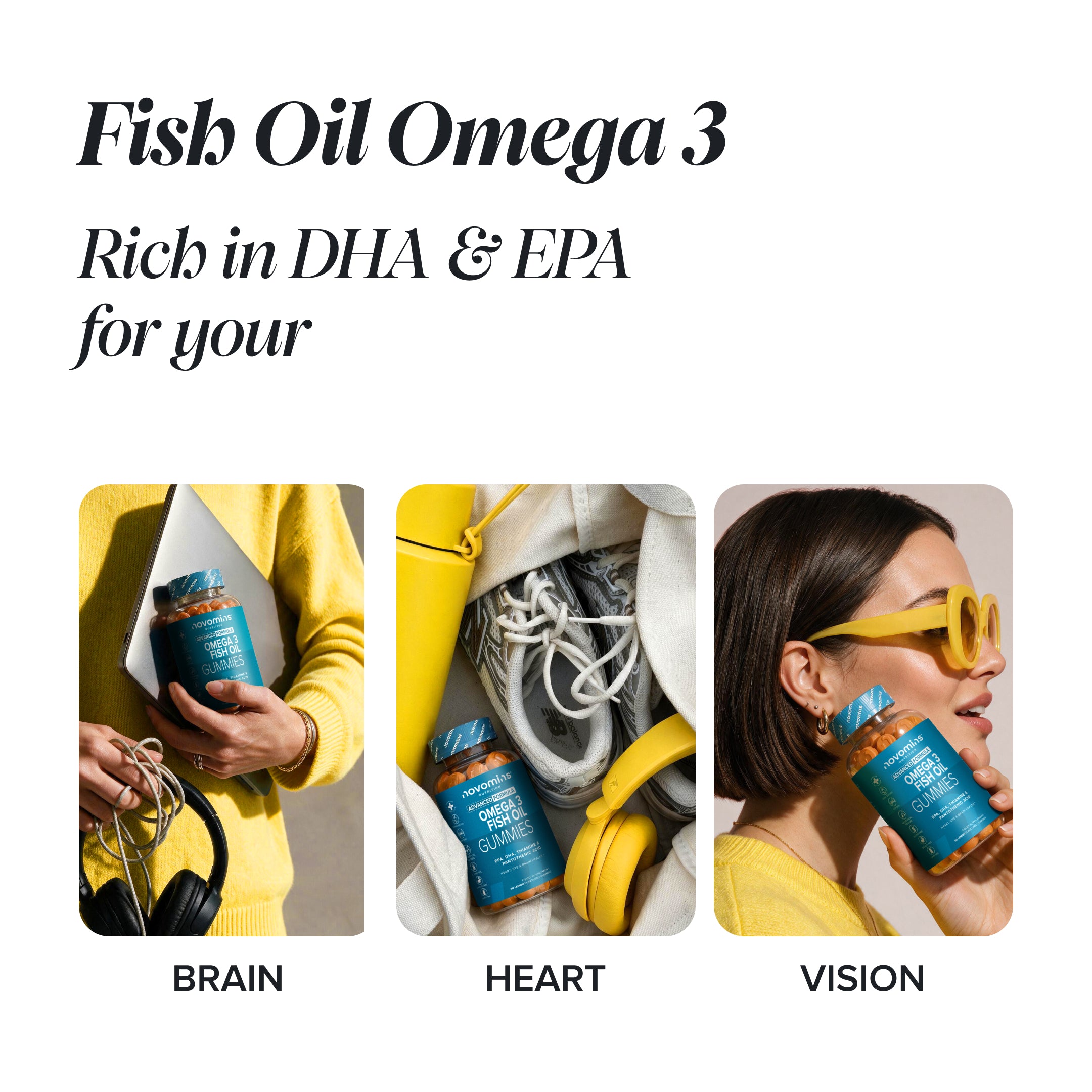
EPA. DHA. Thiamine. Pantothenic acid. Lemon.
Fish oil just got a lot more delicious. 🍋
We have a gummy for it. 🍋
TL;DR: The Omega-3 Cheat Sheet
Short on time? Here’s what you need to know about omega-3, EPA and DHA:
- 🧠 DHA contributes to normal brain function and the maintenance of normal vision, with the recommended daily intake of 250 mg DHA.
- ❤️ EPA + DHA work together, contributing to the normal function of the heart with a recommended daily intake of 250 mg EPA and DHA.
- 🐟 EPA and DHA are found predominantly in oily fish, including salmon, sardines, mackerel and herring, while plant sources such as chia and flax provide ALA, which the body only converts to EPA and DHA in limited amounts.
- ⚖️ Omega balance matters, but there’s no need to villainise omega-6. The bigger question is whether your diet regularly provides enough omega-3, particularly EPA and DHA.
- 🔬 Research continues to explore omega-3 and the brain. Studies have found lower EPA, DHA and total omega-3 levels in young people with ADHD compared with controls, alongside improvements in some attention and ADHD measures following supplementation, although more research is needed.
- ⚡ B vitamins bring extra benefits. Thiamine supports normal psychological and nervous system function, while pantothenic acid contributes to normal mental performance and the reduction of tiredness and fatigue.
- 🍋 Our new Omega 3 Fish Oil Gummies combine EPA, DHA, thiamine, and pantothenic acid in an easy, lemon-flavoured gummy, because getting your omega-3 shouldn’t require wrestling with a giant fish oil capsule.